
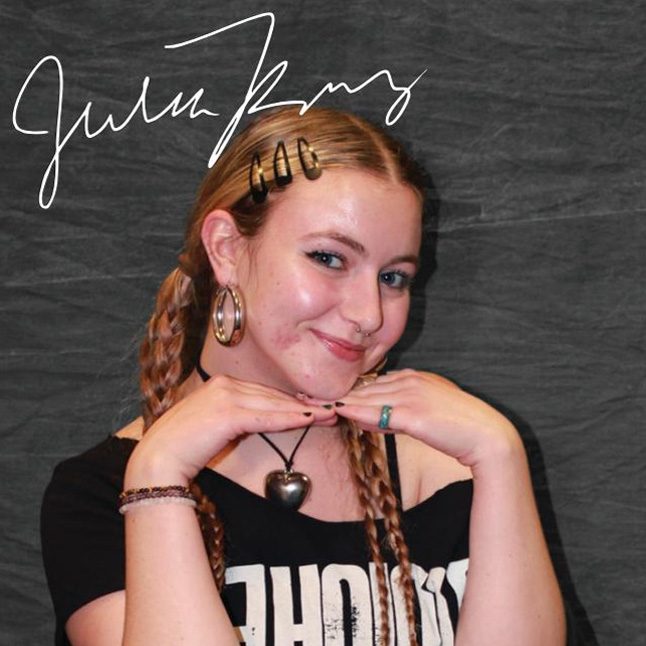

Jolene Lopez
December 20, 2025
Bianca Justiniano-Padilla
Navigating your identity is an inherent part of adulthood, especially within the Latinx community. Still, the process can feel isolating, often leaving you unsure of where you fit. In an interview with creative team member Bianca Justiniano-Padilla—the mind behind our Señorita photoshoot celebrating the coming-of-age of Latinx women—she reflected on how she navigated cultural barriers in both her personal life and her style, while honoring her Bolivian and Armenian roots.
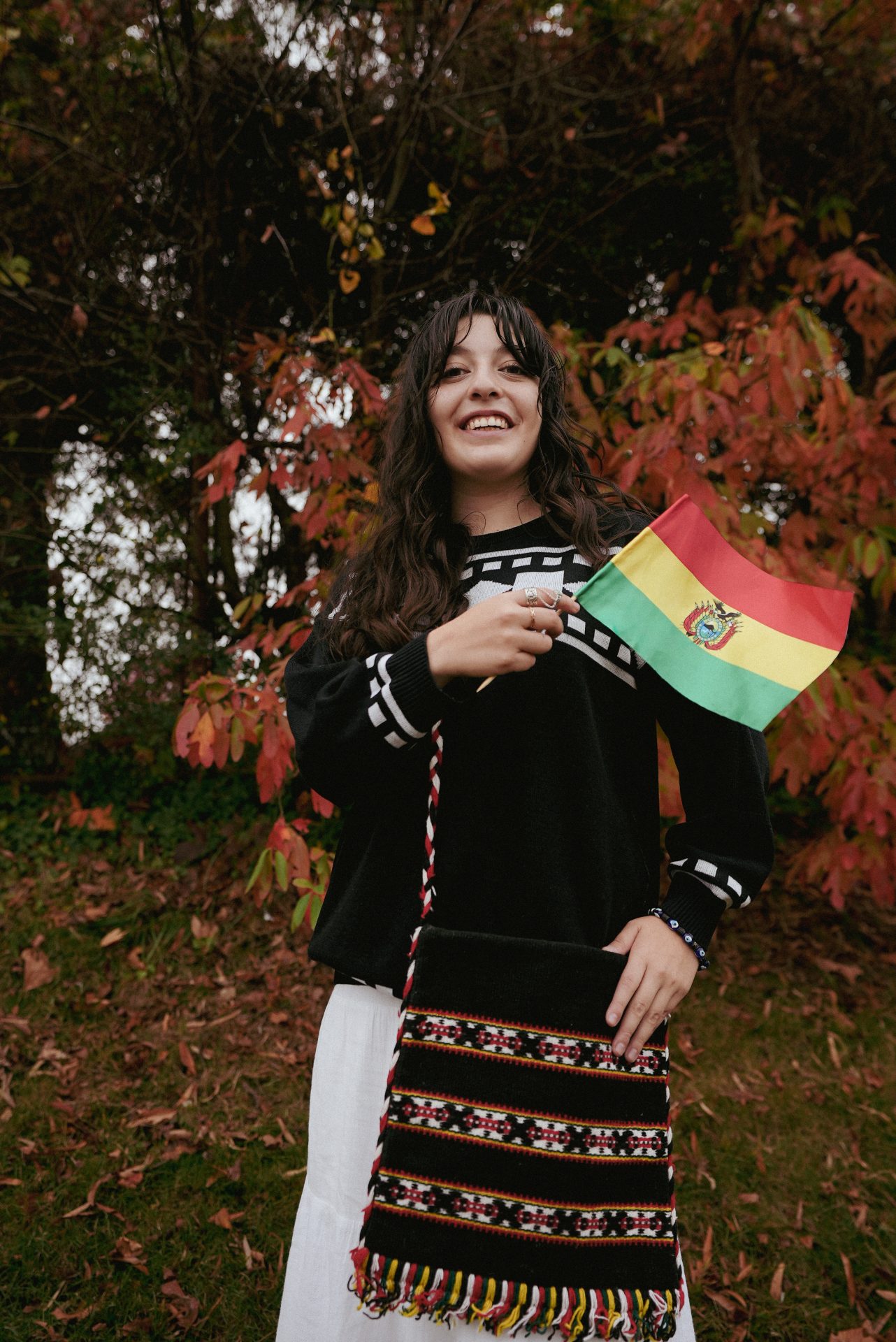
Bianca was raised in Annandale, Virginia, and, despite being an only child, was constantly surrounded by family. She recalled attending large family gatherings filled with music, food, and lively chatter. “I can remember as a kid being at a party, sleepy and scrunched up in a white plastic chair, falling asleep to Romeo Santos and waking up with a jacket placed on me,” she said. Food has always been incredibly important to Bianca, shaped by having a mother who is a chef and family members who taught her that food is a love language. “My grandma would sell empanadas every now and then, and my cousin and I would help her sometimes—rolling the dough, molding and swirling the crust,” Justiniano-Padilla said.
Bianca’s family immigrated to the United States in 2001, leaving Bolivia during a period of economic hardship. She shared that her family is very close and struggled with the idea of being separated across countries. Initially, the plan was for her grandfather and uncle to come to the U.S. as migrant workers to provide financial stability. Ultimately, her entire family immigrated after securing visas. “They told my mom they were going to Disney World, and she didn’t know they were actually moving here,” she said. Over time, through word of mouth, many Bolivians arrived in Northern Virginia in search of work. “Families just kind of followed each other’s advice,” she added.

Alongside her Bolivian background, Bianca is also Armenian. She shared, “My family has an interesting history—because of the Armenian genocide, my family hasn’t been directly from Armenia for a long time. They’re from Lebanon and Syria, so we have history there too.” She has a close relationship with her great-grandmother and great-grandfather on her father’s side, who are entirely Armenian.
Bianca wore a traditionally patterned Bolivian sweater made of llama fiber—distinct to Bolivia and the Andes region—that has been passed down through generations from her great-grandfather. She uses fashion as a way to express her culture; for example, she often shows off her Bolivian jersey to those unfamiliar with Bolivia, sparking conversations about her heritage. She also carries a purse her great-grandparents purchased around 50 years ago in Lebanon. “My purse is really special… My great grandpa passed away two or three years ago, so it’s a nice way to remember him,” she said. Justiniano-Padilla also mentioned her love for all things vintage—a passion her great-grandfather shared.
Bianca found community through the Latinx Student Association (LSA) at VCU. LSA creates its own version of “bigs” and “littles”—typically associated with sororities—through a familia program. Justiniano-Padilla became involved with LSA as a freshman and met several people through the program she related to on multiple levels. She also noted that because many VCU Latinos are from Northern Virginia, she is able to spend time with her LSA friends even when she goes home.
As a young Latina woman, Bianca believes that having pride in your culture, building community, and using fashion as a means of resistance is incredibly important, especially in today’s political climate.
Sharon Tamayo
Sharon Tamayo is a Colombian social work student at VCU who comes from a large, close-knit family. Growing up in the U.S., she didn’t always feel connected to her Colombian background, especially after spending most of her life in predominantly white institutions. It wasn’t until she attended a Latinx summer camp program from grades 8–12 that she began to deepen her relationship with her heritage and identity as a Latina. Her time at VCU has strengthened that connection even further through involvement in organizations committed to diversity and inclusion—work she says “is something I want to continue pursuing as a social worker.”
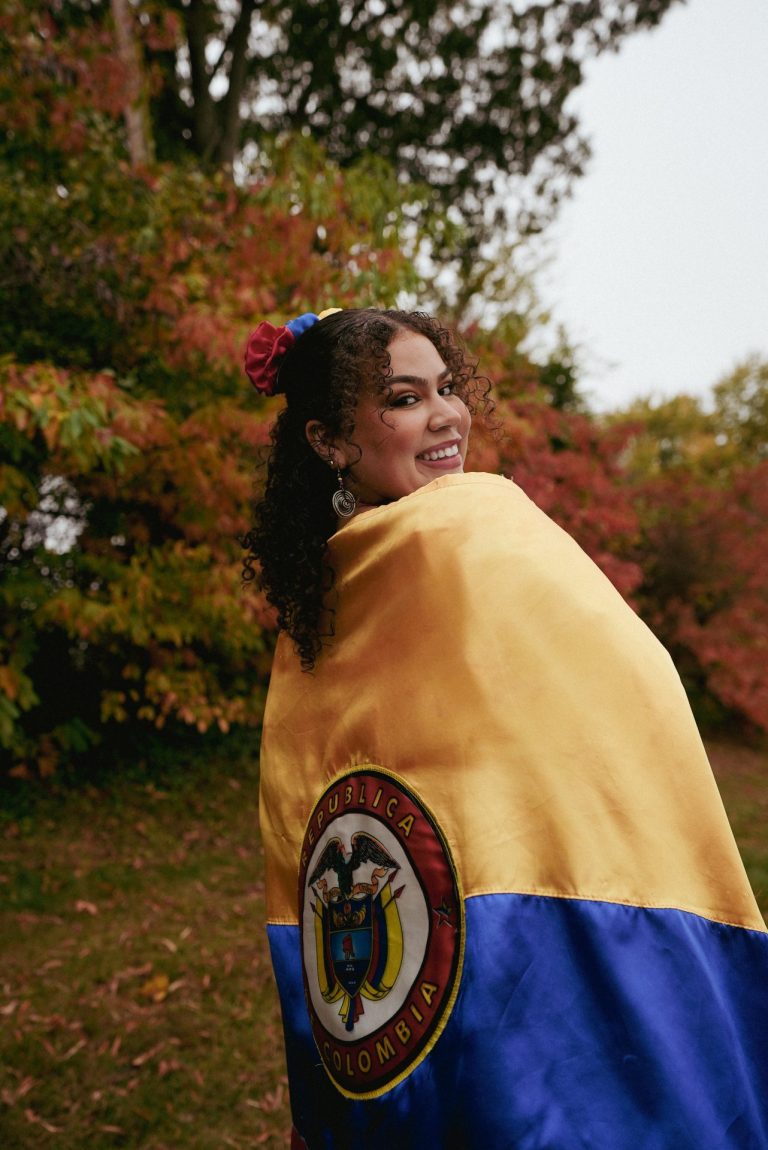
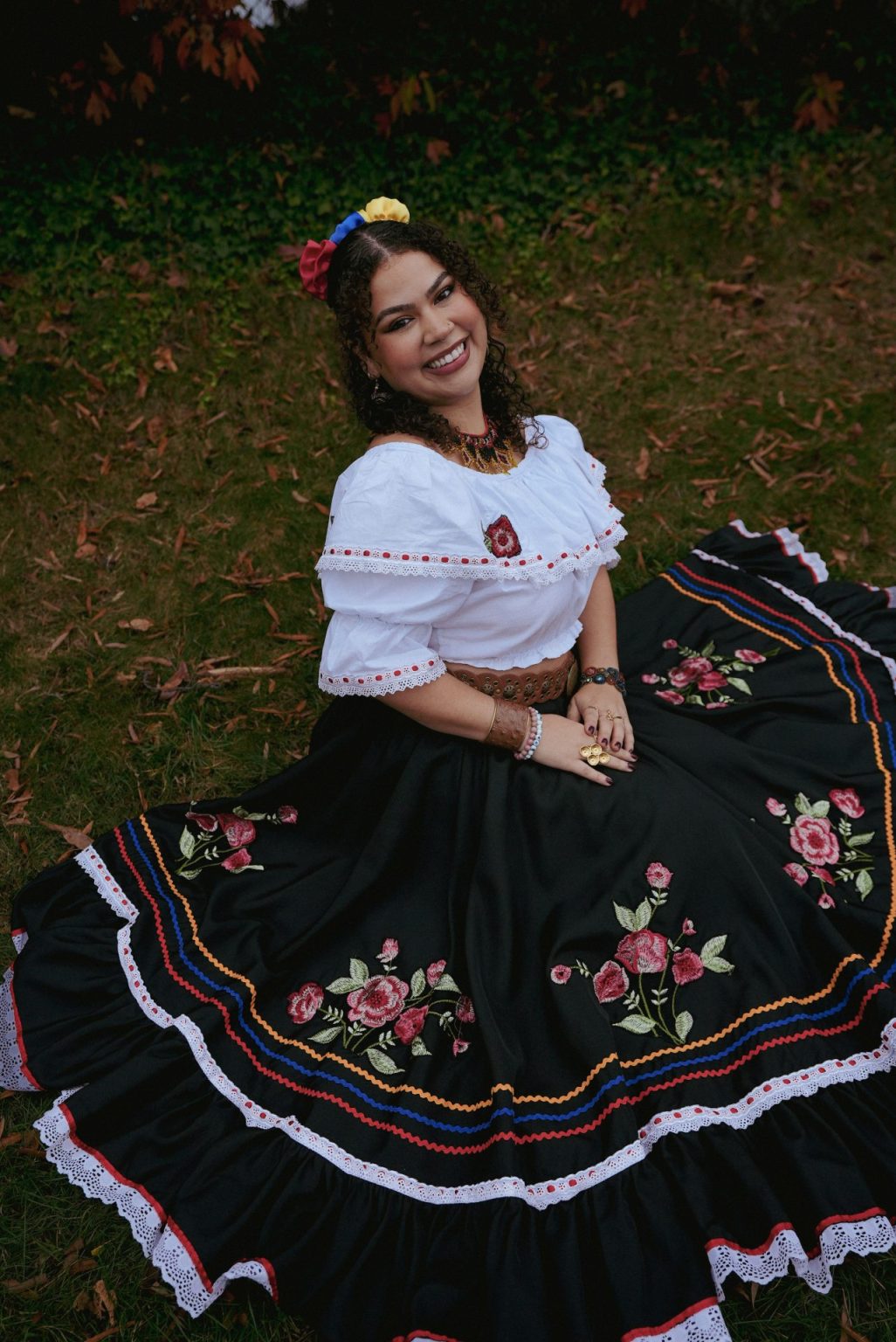
Sharon wore Sombrero Vueltiao–inspired earrings, a style widely recognized across Colombia. Her necklaces, gifted by her aunt, were handcrafted by Indigenous artisans from a small mountainous town called Frontino.
“They’re like chakirita necklaces, and for me I’ve always loved them. I used to make anklets of chakiritas and everything,” she said.
Additionally, her bracelets are an expression of patriotism and cultural pride—something shared by many Colombians. Sharon has been collecting Colombian jewelry since she was young and is always excited for an opportunity to wear it, whether during heritage month or on Independence Day.
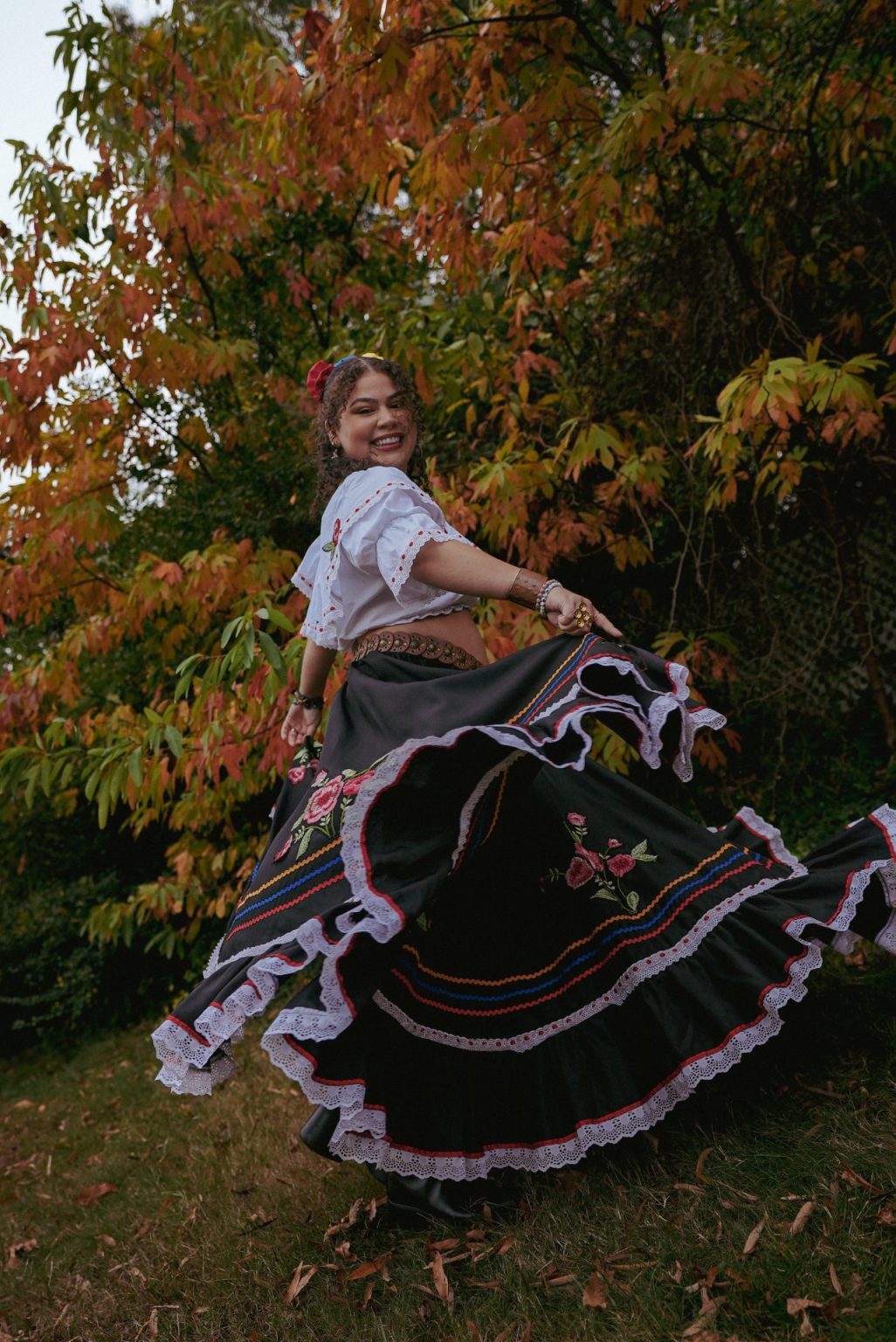
She twirled in her “vestido típico”—a traditional Colombian cultural dress—which comes in many variations. In her culture, men wear their own distinctive outfits, often for traditional dances performed during August at Medellín’s “La Feria de las Flores,” or Festival of Flowers. The festival celebrates Paisa culture’s pride in biodiversity through elaborate displays of camellias and floral imagery. Children often wear garments similar to Sharon’s and take dance classes to perform during celebrations. Reflecting on how this tradition shaped her, she said, “When I grew up, I wanted an adult version, so it has the flowers that are seen in Colombia. Mine has the colors of the flag on it, and the skirt is very long—reminiscent of folklórico dances in Mexico.”
Sharon chose to study social work out of a strong desire to help others and create environments where people feel heard. Her first exposure to the field came from her childhood babysitter, and she quickly realized it was the right path for her. Despite pressure to choose a “safer” or more lucrative career, she stayed committed. “Even if I’m not making the most money or anything, this is what I want to do and what drives me,” she said. Reflecting on her time in the social work program, she added, “It’s been learning about communities, learning about the Richmond community, about empathy, about the intersectionality of everything—of all systems.”
Sharon currently works as a case manager for Families Housing First, a nonprofit housing assistance organization. She serves in two programs where she helps youth and individuals with children secure stable housing. Looking ahead, she hopes to eventually expand her work into politics at a macro level, noting that “the people we elect, the people who are in power are actually the ones that have the power to make a difference, and I want to be in that sphere.”
Credits:
Creative Director: Kristina Wise
Creative Team: Bianca Justiniano-Padilla, Emma Ogden, Miles Ragin
Models: Bianca Justiniano-Padilla, Sharon Tamayo
Photographer: Elizabeth Murphy